
 how-to
How to Prevent Online Art Supplies Damage
Table of Contents
- Why Art Supplies Get Damaged in Transit
- How to Inspect Art Supplies Upon Arrival
- Your Consumer Rights for Damaged Online Deliveries
- Packaging Choices That Protect Paints, Brushes and Paper
- Art Supply Storage Tips Once Everything Arrives
- What to Do When Art Supplies Damage Happens Anyway
- Frequently Asked Questions
Last Updated: October 9, 2026
Why Art Supplies Get Damaged in Transit
Art supplies damage happens most often because paint tubes, glass jars and paper pads are fragile, heavy and awkwardly shaped. They shift inside loose packaging, and a single drop cracks a jar or crumples a pad.
The journey is rough. Parcels pass through sorting machines, get stacked under heavier boxes, and sit in cold vans for hours. Paper warps with damp. Solvents leak if a cap loosens. Brushes bend when something presses on the bristles.
Most damage traces back to three causes:
- Weak outer boxes that crush under stacked parcels
- No padding between items, so they knock against each other
- Liquids packed upright with no seal or bag around them
Knowing this helps you spot trouble before you order, and it shapes how you check a parcel when it lands.
How to Inspect Art Supplies Upon Arrival
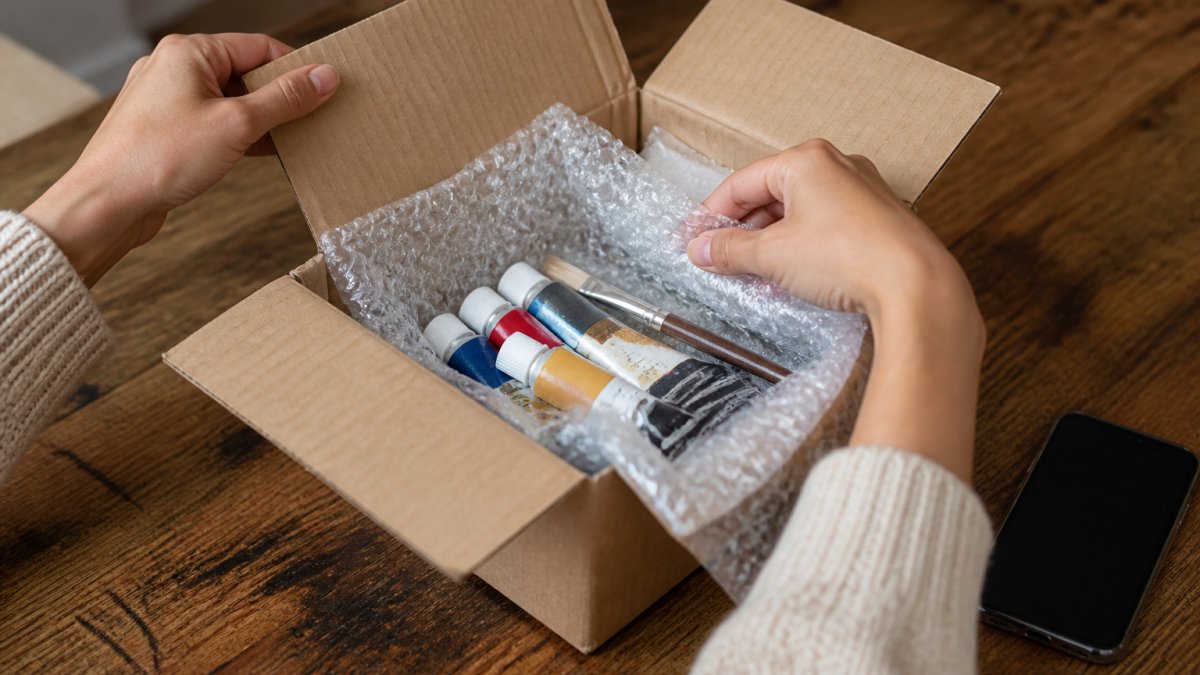
Inspect art supplies the moment they arrive, before you put the box away. Open the parcel on a hard surface, check each item against your order, and note anything that looks crushed, damp or leaking.
Work through it in a set order so nothing gets missed.
What to Check Before You Sign for a Delivery
Check the outside of the box first. If it is dented, torn or damp, say so before you sign. A signature can be treated as proof the parcel arrived in good order, which makes a later claim harder.
Look for:
- Crushed or punctured corners
- Water stains or a soft, damp feel
- Rattling when you tilt the box
- Tape that has been cut and re-sealed
If the driver will wait, open the box in front of them. If not, sign as "unchecked" where the courier allows it, then inspect straight away.
Photographing Damage for a Claim
Photos are your evidence, so take them before you throw anything away. A clear set of images speeds up any claim.
Capture:
- The outside of the box, showing the label and any damage
- The open box with the packing materials still inside
- Each damaged item on its own, in good light
- A close-up of cracks, leaks or bent bristles
Keep the packaging until the claim is settled. Many retailers ask for it, and some couriers want to collect the item for inspection.
Your Consumer Rights for Damaged Online Deliveries
Consumer rights for damaged online deliveries are strong. Under the Consumer Rights Act 2015, goods must be of satisfactory quality, fit for purpose and as described. If your art supplies arrive damaged, the retailer is responsible, not the courier.
That last point matters. A common mistake is chasing the delivery company for a refund. Your contract is with the seller, so the seller must put things right. This applies whether the parcel was dropped, crushed or left in the rain.
Your main options are:
- A repair or replacement, where possible
- A full refund if a replacement is not available
- A refund if the item arrives and you reject it within 30 days
You can read the full details on the official guidance on the Consumer Rights Act 2015. For practical help with a dispute, the Citizens Advice service explains how to raise a complaint and escalate it.
Packaging Choices That Protect Paints, Brushes and Paper
Good packaging is the single biggest defence against art supplies damage. The right box, padding and seals stop items moving, and movement is what breaks things.
When you order, it helps to know what to expect. A well-packed parcel usually has:
- A rigid outer box, not a thin mailer
- Padding on all six sides, not just the top
- Liquids sealed in a bag, in case a cap leaks
- Paper and canvas kept flat, away from box edges
- Brushes capped or rolled so bristles cannot bend
If you pack your own supplies to send, follow the same rules. Wrap glass jars in bubble wrap, fill gaps so nothing slides, and tape every seam. Mark the box "fragile" and "this way up".
Art Supply Storage Tips Once Everything Arrives
Art supply storage tips matter because damage does not stop at the doorstep. Heat, light and damp keep working on your materials long after delivery, and poor storage undoes good packaging.
Store supplies in a cool, dry, dark place. A cupboard beats a sunny windowsill every time.
Storing Paints and Solvents Safely
Keep paints and solvents away from direct heat and sunlight. Both speed up spoilage and can make solvents give off fumes.
- Stand tubes upright with caps tight
- Store solvents in a locked cupboard, out of reach of children and pets
- Keep the room ventilated
- Check caps every few months for leaks
Protecting Paper, Canvas and Brushes
Paper and canvas warp when damp, so keep them flat and off the floor.
- Store paper flat in a sealed folder or plan chest
- Keep canvas upright and away from radiators
- Store brushes bristle-up in a jar, or rolled in a mat
- Never leave brushes standing in water
What to Do When Art Supplies Damage Happens Anyway
Damage still happens, even with good packaging and careful storage. When it does, act quickly and keep a clear record.
Follow these steps:
- Photograph the damage before moving anything
- Contact the retailer within 30 days to reject the goods
- State clearly whether you want a refund or a replacement
- Keep the packaging until the claim is settled
- Escalate to Citizens Advice if the seller will not resolve it
Most sellers want to fix this fast. A clear, polite message with photos attached usually gets a quick result.
| Situation | Your Best Move | Time Limit |
|---|---|---|
| Item arrives damaged | Reject it and ask for a refund | 30 days |
| Faulty within 6 months | Ask for repair or replacement | 6 months |
| Fault found later | Ask for a repair or price reduction | Up to 6 years |
| Seller will not help | Escalate to Citizens Advice | As soon as possible |
Frequently Asked Questions
What should I do if my art supplies arrive damaged?
Photograph the packaging and the damaged items before unpacking further, then contact the retailer within 30 days of delivery. Under the Consumer Rights Act 2015, goods must be of satisfactory quality, fit for purpose and as described. If they arrive damaged, you are entitled to a repair, replacement or full refund from the seller. Keep the original packaging until the issue is resolved, as it may be needed as evidence.
How does the Consumer Rights Act 2015 protect me for damaged online deliveries?
The Act gives you a 30-day right to reject faulty or damaged goods and claim a full refund. After 30 days, you can still request a repair or replacement, and if that fails, a price reduction. For online orders, the Consumer Contracts Regulations 2013 also give you 14 days to cancel from the day you receive the goods, which is separate from your damage rights. Always report damage to the seller promptly.
How should I store paints and brushes to prevent damage after delivery?
Keep paints away from direct sunlight and temperature swings. Store brushes bristle-up in a jar or flat in a brush roll to hold their shape. Acrylics and oils should be sealed tightly to stop them drying out. Solvents like white spirit need a cool, ventilated spot away from heat sources. A simple cupboard or drawer away from radiators works well for most supplies.
Can I tell if art supplies have been damaged by temperature changes during transit?
Yes. Water-based paints may separate, thicken or develop a skin on top. Oil paints can become stiff or leak oil. Paper and canvas may warp, cockle or show condensation marks. If a tube feels unusually firm or a bottle looks swollen, treat it as suspect. Test a small amount on scrap paper before using it on a project, and report any issues to the seller with photos.
Damaged supplies are frustrating, but they are rarely the end of a project. With the right checks, storage and a clear claim process, you can keep your materials in good shape and get problems sorted fast.
At Targ8 Arts Limited, we stock a wide range of art, craft and office supplies at competitive prices, backed by friendly, reliable service. Browse our stores to find quality materials that arrive ready to use, and shop with a team that stands behind every order.